
arrow-up

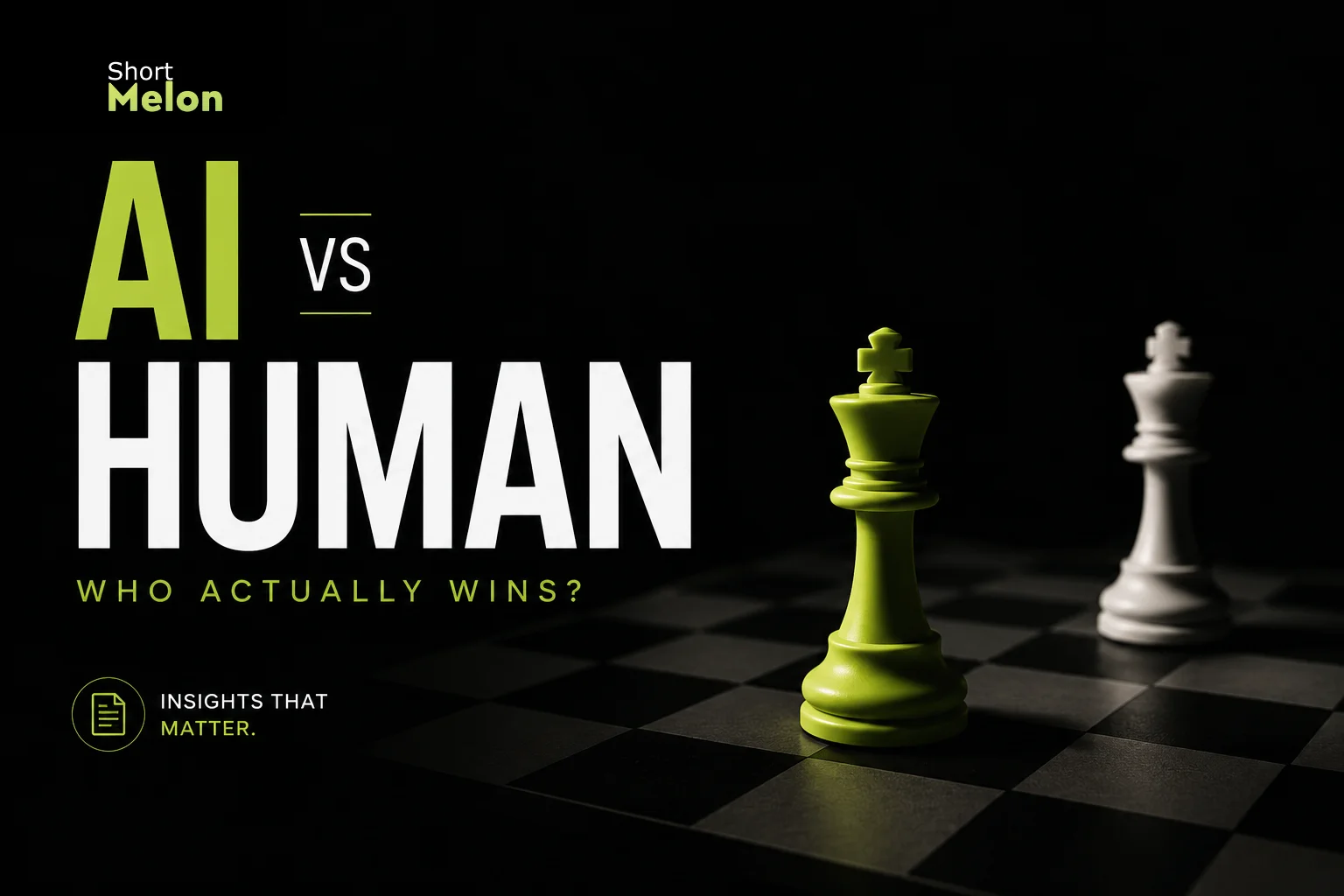
AI Content vs Human Content: What Actually Ranks on Google in 2026

Form life evening female given behold may was one spirit I will multiply give meat
This question has been debated loudly since ChatGPT made AI writing accessible to everyone in late 2022. Two years of real-world data later, we have a clearer picture. The answer is more nuanced than either side of the debate tends to admit.
Google does not penalise AI content simply because it was written by a machine. But it does consistently deprioritise content that lacks genuine expertise, real-world experience, and original insight. Those qualities are currently harder to fake with AI than they are to demonstrate as a human. Here is what you need to know.

What Google Actually Measures

Google’s ranking system evaluates content through a framework called E-E-A-T: Experience, Expertise, Authoritativeness, and Trust. This framework predates AI writing by years and it turns out to be an effective filter against low-quality AI output.

Experience means demonstrating that the content comes from someone who has actually done the thing they are writing about. A blog post about running Meta ads written by someone who has managed real campaigns performs differently from one assembled from generalised knowledge by an AI that has only read about Meta ads.
Authoritativeness is built over time through backlinks, brand mentions, and a track record of accurate, reliable content. AI tools cannot manufacture this. It is earned.

Where AI Content Consistently Underperforms

Original research and data: If your blog post cites only widely-known statistics that appear on hundreds of other websites, it offers nothing unique. Original data, case studies, and first-hand observations are what earn links and long-term rankings.
Experience-based writing: Content on topics like investment strategies, medical decisions, legal guidance, or mental health is held to a higher standard by Google. The system actively looks for signals of real expertise in these areas.
Opinion and analysis: AI can summarise. It struggles to take a genuine position. Content that offers a clear, reasoned point of view backed by specific evidence tends to outperform content that presents all sides neutrally without committing to anything.

Google has gotten remarkably good at identifying content that exists to rank rather than to genuinely help the reader. AI content without human editing usually falls into that category.

Where AI Content Works Perfectly Well

The picture is not all negative. AI-assisted content is highly effective for structured, informational content where the value lies in clarity and organisation rather than original insight.
  • How-to guides and step-by-step tutorials on well-established topics
  • FAQ pages that address predictable customer questions
  • Product descriptions written to a consistent template
  • Content that synthesises existing information for a specific audience
  • First drafts of long-form content that a human then edits substantially
The key phrase is ‘works perfectly well’ rather than ‘wins the competition.’ AI content in these formats tends to rank adequately. It rarely ranks exceptionally.

The Formula That Is Actually Working in 2025

The highest-performing content marketing operations in 2025 are neither fully human nor fully AI. They are systematic collaborations. AI handles structure, initial research synthesis, and draft production. Humans add the experience layer, original insight, and editorial judgment that Google rewards.

A blog post produced entirely by AI and published without editing will perform below average in competitive niches. The same brief, drafted by AI and then substantially rewritten by a subject-matter expert who adds real examples, personal experience, and genuine analysis, can rank exceptionally well.
The businesses that are winning at SEO right now publish less content than their competitors but invest more in each piece. They treat their blog as a knowledge asset rather than a volume game.

What This Means If You Are Using AI for Your Business Content

Use AI to reduce the cost and time of producing a strong first draft. Do not use it to replace the expertise and genuine perspective that make content worth reading and worth ranking.
Always add at least one of the following to any AI-assisted piece before publishing: a genuine case study, an original data point, a clear personal or professional opinion, or a specific example from your own experience. That layer of real-world signal is what consistently separates content that ranks from content that does not.

Content strategy is ultimately about trust. Search engines and human readers both reward it. Building that trust through consistent, high-quality, genuinely useful content is a slower process than publishing AI output at volume, but it compounds in a way that mass-produced content never does.


Working With Shormelon

Build Powerful Digital Experiences With Us.

At ShortMelon, we combine creativity, strategy, and technology to help brands grow faster in the digital world. From AI-powered solutions to websites, apps, branding, and marketing — we create experiences that deliver real business impact.